Energy Storage and Conversion Applications
Colloidal Nanomaterials offer precise control over particle size, shape, crystal phase, and surface chemistry at the nanoscale. This level of tunability enables shorter ion-diffusion pathways, larger active surface areas, and improved accommodation of volume changes during charge–discharge cycling. These benefits ensure high capacity and long-term stability. By tailoring surface ligands and post-synthetic treatments, electronic conductivity and ion accessibility can be further enhanced, resulting in anodes with improved rate capability, cycling performance, and overall energy storage efficiency.
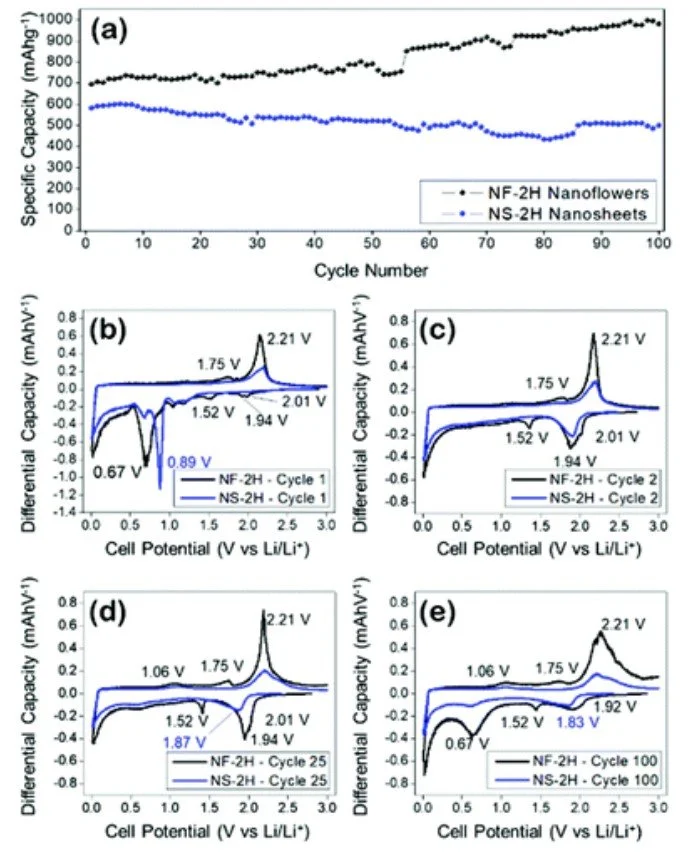
In this direction, our group has colloidally synthesised nanocrystals of transition metal chalcogenides (e.g., tungsten diselenide, WSe₂) that can function as active anode materials for lithium-ion batteries. These nanocrystals were made with controlled crystal phases and morphologies using a colloidal hot-injection method and exhibited promising capacity and cycling performance.
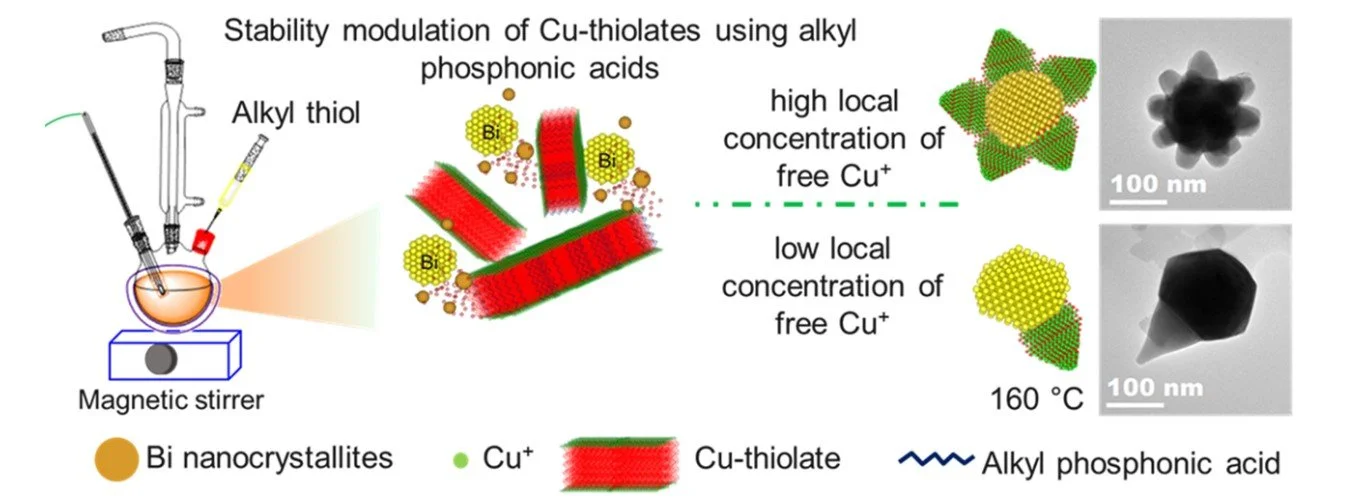
Further, our group has also shown a colloidal hot-injection strategy to synthesise well-defined multipod heterostructured nanocrystals. This solution-processed approach produces uniform, high-surface-area nanostructures that enhance potassium-ion diffusion and accommodate the large volume changes associated with K-ion alloying reactions.